Everyone Has an Answer. But Who Can We Actually Trust?
You have a question about your health.
Perhaps it’s a symptom you’ve been experiencing for weeks, something you’ve read about menopause or a concern about your child’s behaviour.
Where do you go first?
Your GP? Google? Instagram? ChatGPT?
For many of us, searching online is an obvious starting point. We want answers, reassurance and information that helps us understand what might be happening.
And there is no shortage of it.
The challenge is knowing what to believe.
This is something I’ve been thinking about a lot recently, particularly while talking to communications professionals about PR, trust and AI.
Because while technology has changed how we find information, it hasn’t removed the need for credible expertise.
If anything, I think it’s made that need greater.
Being visible isn’t the same as being credible
I’ve worked in PR for more than 30 years, and one thing hasn’t changed: anyone can make a claim, but that doesn’t automatically make it true.
What’s different now is the speed at which information can spread.
A confident social media post can reach thousands of people. A health trend can become popular before anyone has properly examined the evidence behind it.
AI tools can provide answers in seconds, often in language that sounds clear, convincing and authoritative.
But an answer that sounds convincing isn’t necessarily an answer that’s right.
And when we’re talking about someone’s health, that distinction matters.
Health information comes with responsibility
If you’re promoting a health product, sharing research or positioning yourself as an expert, you need to be able to stand behind what you’re saying.
Where does the evidence come from?
What does it actually tell us?
Are there limitations?
Is this something you are genuinely qualified to comment on?
These might sound like obvious questions, but they’re not always asked.
I’ve seen how tempting it can be to make a headline bigger, a claim stronger or a message simpler in the hope of securing more attention.
Sometimes that works in the short term.
But in health PR, a dramatic headline that doesn’t stand up to scrutiny can do far more harm than good.
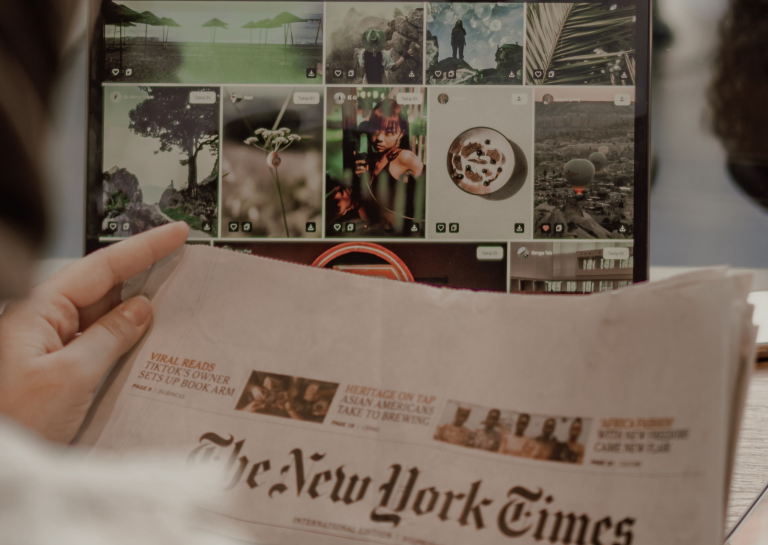
Journalists still have an important role
This is one of the reasons I continue to believe so strongly in earned media.
Good health journalism involves asking questions, examining evidence, seeking appropriate expertise and making complicated subjects understandable.
Of course, journalists can make mistakes too. No system is perfect.
But credible editorial coverage offers something very different from publishing claims about yourself on your own channels.
There is scrutiny. There is context. There is someone asking whether the story is accurate, relevant and worth sharing.
For health experts and organisations, that matters enormously.
Being quoted in a respected publication isn’t simply another logo for your website. It is an opportunity to contribute to public understanding of an issue.
And that opportunity comes with responsibility.
AI can help us communicate, but it shouldn’t replace our judgement
I’m not anti-AI.
It can be incredibly useful for organising research, exploring ideas, reviewing drafts and making information more accessible.
But I don’t believe we should confuse producing content quickly with producing something valuable.
A well-written paragraph is not a substitute for expert knowledge.
A polished quote is meaningless if the person attributed to it cannot explain or support what it says.
And a beautifully presented piece of health content can still be misleading if the evidence has been misunderstood.
This is why I think PR professionals, particularly those working in health and wellness, need to become even more rigorous about what we publish and promote.
The job isn’t to make everything sound impressive.
It’s to help people understand what matters and why.
Trust is built over time
For health professionals and wellness brands, credibility rarely comes from one interview, one viral post or one clever campaign.
It comes from consistency.
From sharing useful information, acknowledging uncertainty where it exists, staying within your expertise and being someone journalists can rely on.
It’s also about knowing when not to make a claim.
Sometimes the strongest thing an expert can say is that the evidence isn’t clear yet.
That may not make the most exciting headline, but it helps build something far more valuable.
Trust.
As AI continues to change how people discover information, I believe the people and organisations that stand out won’t necessarily be those producing the most content.
They’ll be the ones whose expertise people have good reason to believe.
Because when everyone has an answer, being someone people can trust matters more than ever.
At Natalie Trice Publicity, I work with health and wellness experts, organisations and brands to build visibility grounded in credible stories, evidence and trusted media relationships.
Natalie
SEO title: AI, Trust and Health PR: Why Being Credible Matters More Than Ever
Suggested URL: /news/ai-trust-health-pr/
Meta description: AI is changing how people find health information. Natalie Trice explains why credible expertise and trusted media coverage matter more than ever.